Intralogistics · Automated storage

Automated storage & intralogistics: from warehouse to production

Illustrative use case for an industrial site seeking to densify storage, reduce travel and connect warehouse, picking, production and dispatch without forcing a single technology.

Illustrative use case · architecture to be validated with site data
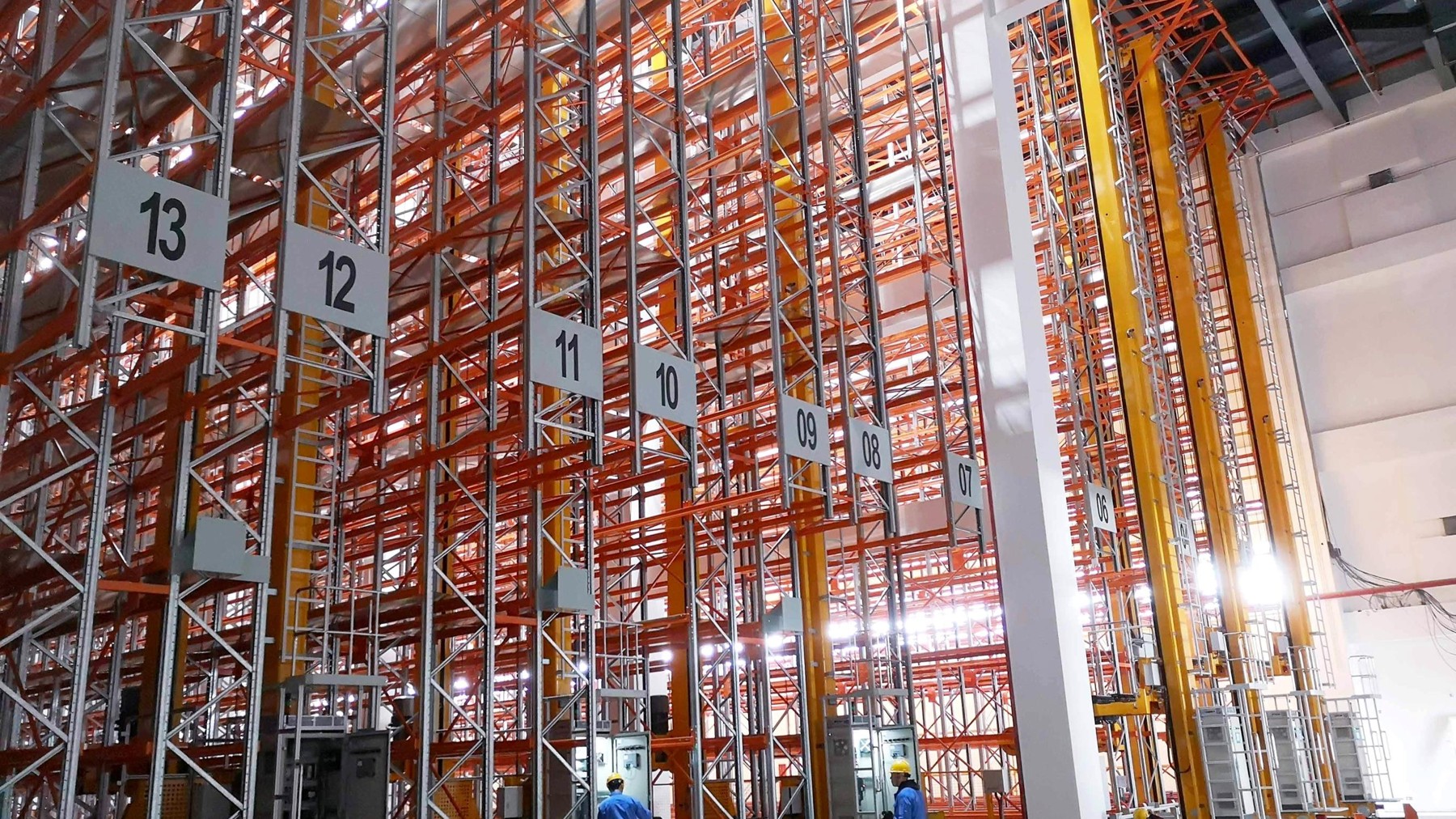
High-bay automated storage aisles
01
Context

Starting point

Components, spare parts, totes or pallets occupy significant floor area and create many movements between receiving, storage, production workstations and dispatch. Operations may combine manual picking, forklifts, buffers and software already in place.

02
Problem

What needs to improve

  • Floor space is saturated while available height is underused
  • Too much operator or forklift travel between storage and production
  • Variable search and picking time across SKUs
  • Partial traceability between physical movements and stock data
  • Manual recovery increases during peaks and exception cases
03
Possible architecture

A hybrid architecture to size

  • VLM / vertical storage for small parts, tools, consumables and spare parts
  • AS/RS, pallet shuttle or stacker crane where density, volumes and repeatability justify them
  • Conveying and AGV/AMR to connect storage, buffers, lines and dispatch
  • Barcode / RFID, picking and checking stations according to traceability needs
  • WMS/WCS layer interfaced with ERP/MES where the IT architecture allows it
SYNTAVER positioning

This use case does not present proprietary SYNTAVER equipment or a SYNTAVER client reference. The hardware building blocks shown come from industrial supplier technical documentation. Integration work consists in selecting the right automation level, checking interfaces, qualifying documentation and connecting the system to the site’s real process.

Technical scoping sheet

What must be confirmed before selecting VLM, AS/RS, conveying or AGV.

Technologies are sized from logistic units, the real flow profile, digital interfaces and actual exception cases.

01Logistic units+
  • SKUs / families
  • Dimensions, weight and stability
  • Totes, cartons, pallets or loose parts
  • ABC rotation / pick frequency
02Flow profile+
  • Average and peak per hour
  • Production replenishment
  • Urgent / priority orders
  • Buffers and waiting time
03Layout & building+
  • Clear height and available footprint
  • Floor, access, doors and circulation
  • Crossings / safety zones
  • Potential future extensions
04Data & interfaces+
  • Existing ERP / MES / WMS
  • Barcode, RFID, weighing, labelling
  • Routing and priority rules
  • Events and stocks to trace
05Exceptions & degraded mode+
  • Out-of-gauge / unreadable item
  • Module failure or network loss
  • Manual fallback picking
  • Recovery and stock reconciliation
06Acceptance criteria+
  • Throughput reached with representative mix
  • Routing / picking accuracy
  • Recovery time after incident
  • IT interfaces and traceability validated

Modular architecture

Three families of building blocks can coexist in one project.

The architecture does not need to be “fully automated”. A site can combine compact storage, automated storage and connected transfers depending on product families and movement frequency.

Block 1

VLM / vertical storage

Small parts, tools, consumables, semi-finished goods or spare parts: use building height and bring stock to the operator with controlled access.

Block 2

AS/RS / shuttle / stacker

Pallets or totes with higher volumes: densify storage and automate put-away / retrieval where the flow profile justifies it.

Block 3

Flow & orchestration

Conveyors, AGV/AMR, picking stations, WMS/WCS and ERP/MES interfaces connect physical zones and operating rules.

Available building blocks

Existing equipment used to build a site-specific architecture.

The images shown here come from the technical documentation received for this study. They illustrate solution families available on the market; they are not SYNTAVER client references.
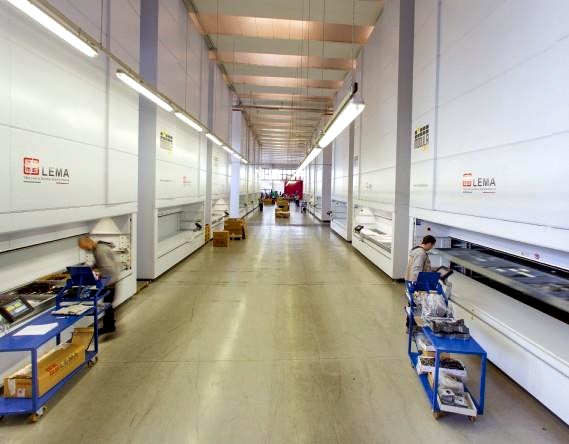
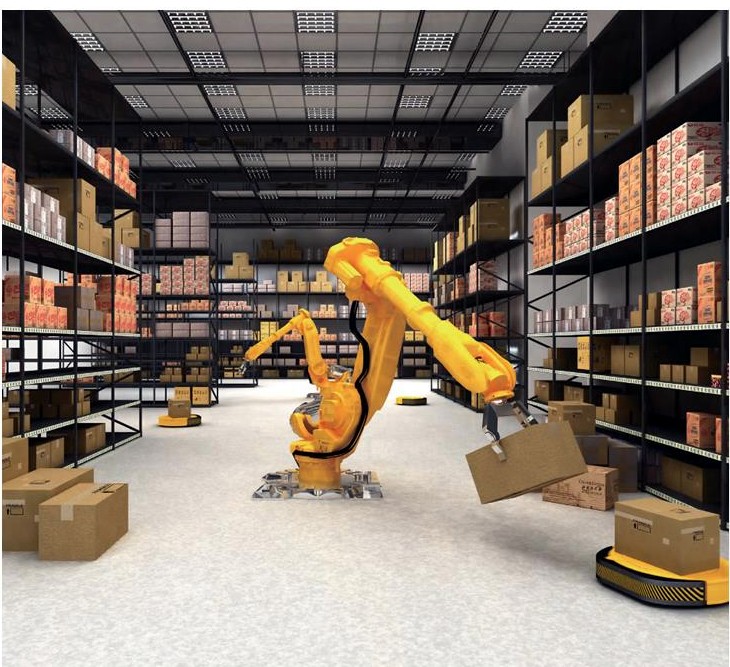
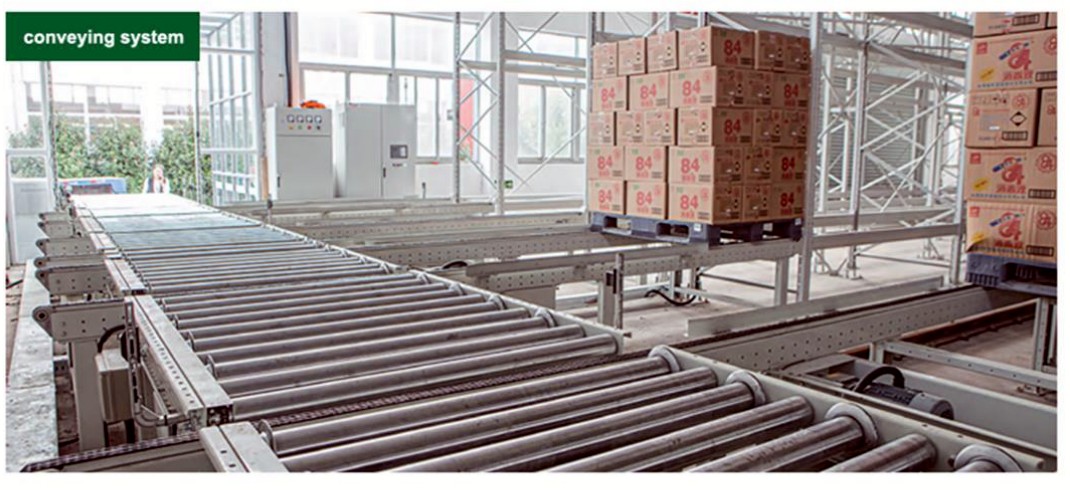
  • High-bay automated storage
  • Goods-to-person vertical storage
  • Automated handling and AGV
  • Conveying and sorting

Supplier technical reference

Example available range for a vertical lift module.

The figures below are extracted from the H&H LIFT documentation supplied for this study. They are only scoping orders of magnitude; the actual model, performance, conformity and operating conditions must be verified on the selected reference.

GEOMETRY

Height & trays

  • Unit height: 3.3 to 16.1 m
  • Tray width: 1.5 to 4.1 m
  • Depth: 654 or 857 mm
  • Storage pitch: 25 mm
LOAD

Capacity

  • Total payload: 35 to 90 t depending on model
  • Up to 990 kg per tray depending on configuration
  • Variable material height depending on bay
THROUGHPUT

Access / picking

  • Up to 120 trays / h depending on configuration
  • Internal or external bays
  • Single or dual delivery
  • Access possible on different sides / levels
INTEGRATION

Software & peripherals

  • WMS for stock management
  • Possible ERP integration
  • Robot, conveyor and Put-to-Light integration
  • Interaction with handling equipment
Key pointThe supplier sheet shows that a VLM can be one system building block rather than a stand-alone cabinet. SYNTAVER sizing must still start from flow, loads, building constraints, IT interfaces and the customer’s ROI.

Data before technology

What we measure before freezing an intralogistics architecture.

The same dataset determines whether the need remains assisted manual work, moves to VLM, requires a conveyor flow or justifies a wider AS/RS.

FLOW

Volume & variability

  • Moves / picks / hour
  • Daily and seasonal peaks
  • SKU mix and rotation
  • Waiting time / saturation
PHYSICAL

Travel & constraints

  • Distances and crossings
  • Weight, dimensions, stability
  • Buffers and available footprint
  • Clear height / building constraints
DATA

Systems & identification

  • ERP / MES / WMS / WCS
  • Barcode / RFID / labels
  • Orders, stocks and priorities
  • Machine / workstation interfaces
EXCEPTIONS

Cases that break the flow

  • Urgent / priority
  • Out-of-gauge / unreadable
  • Reject / manual recovery
  • Failure and degraded mode
Expected decisionSelect a proportionate architecture: workstation optimisation, VLM, conveying, AGV/AMR, AS/RS or a combination of several blocks — only when site data justify it.

Integration role

Hardware is one building block. Project value is created at the interfaces.

In a multi-supplier architecture, scoping must make responsibilities explicit across equipment, controls, software and the customer site.

01Audit & data

Map flows, stocks, peaks, travel, exceptions and existing systems.

02Architecture & ROI

Compare several automation levels and verify capacity, footprint, throughput, availability and total cost.

03Supplier qualification

Check datasheets, interfaces, documentation, spare parts, FAT, lead times and conformity scope for selected references.

04Integration & validation

Coordinate mechanical, electrical, safety, WMS/WCS, ERP/MES, FAT/SAT, degraded modes and restart.

Important

Brands, performance claims and certifications that may appear in supplier documents are not presented as SYNTAVER promises. They must be verified model by model before any contractual offer or integration.

Pre-qualification

A layout, volumes and a few real movements are enough to start.

We can first determine whether the subject is an assisted workstation, a VLM, a connected flow or a wider automated-storage architecture.

Describe the need →