
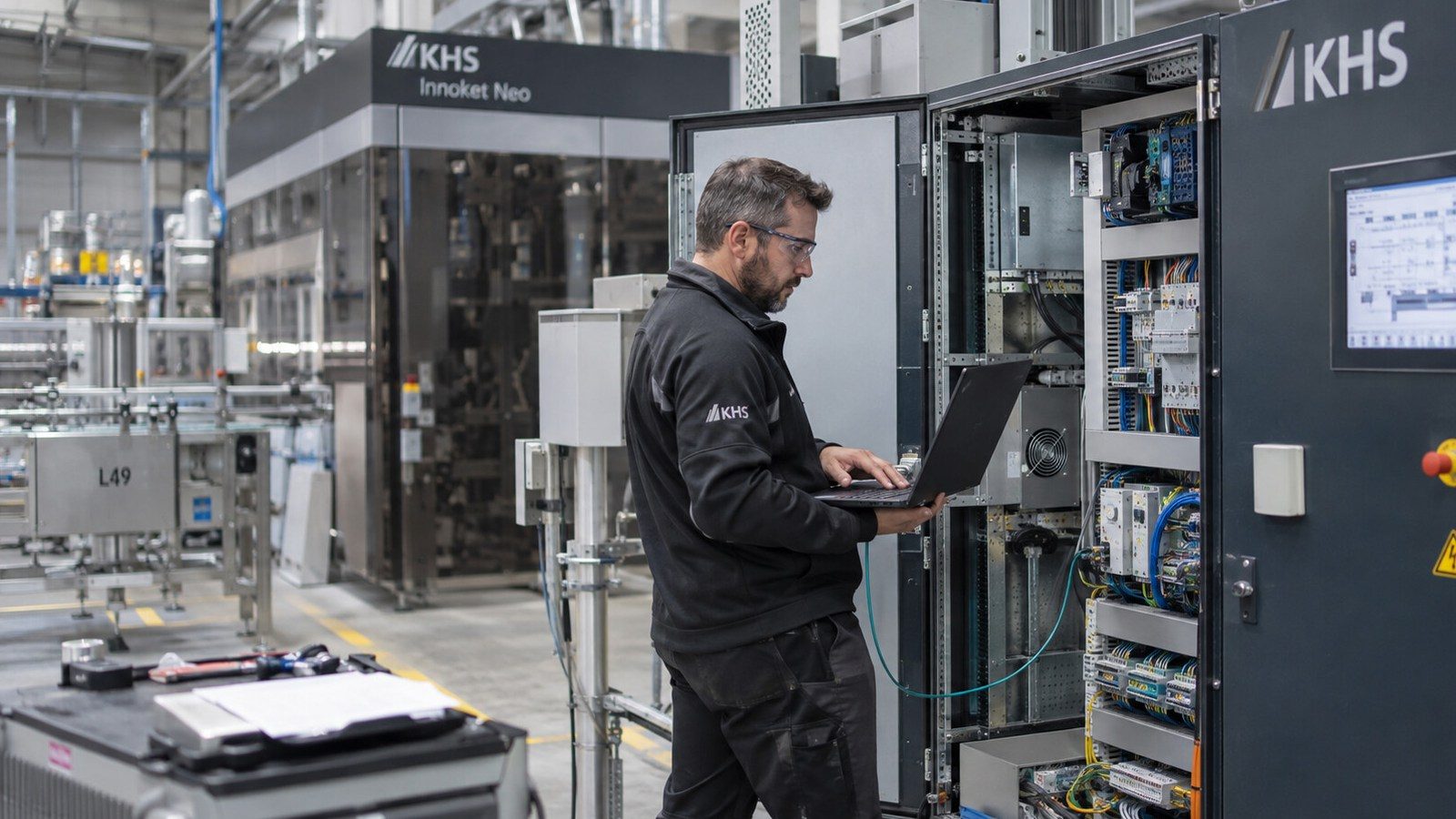
- Field problem
- Manual bottlenecks, mechanically sound equipment with ageing controls, unstable throughput or difficult format changes.
- Possible building blocks
- PLC / HMI, motion, sensors, targeted robotics, conveying, safety and machine interfaces.
- Useful inputs
- Current cycle, downtime, photos / drawings, installed PLC, product formats and available shutdown window.
- Scoping output
- Retrofit scope, proposed architecture, interfaces, shutdown plan, FAT/SAT criteria and budget order of magnitude.
Solutions
An architecture matched to the real needs of your site.
Six core engineering capabilities, combined across production, quality, intralogistics, agri-food and end-of-line applications.
Two levels of reading
Your applications on one side. Our technical capabilities on the other.
A warehouse, sorting line or production workstation cannot be reduced to one machine category. We separate the operational need from the engineering building blocks required, so the solution is not over-sized.
01
Technical capabilities
The building blocks we integrate.
Automation & targeted roboticsCycle, indexing, operator assistance, retrofitMachine vision & sensorsDetection, measurement, sorting, traceabilityControls & softwarePLC, HMI, networks, supervision, dataSafety & complianceRisk, safety functions, documentationConveying, motion & end-of-lineTransfer, accumulation, handling, packagingEurope–Asia technical sourcingQualification, documentation, total cost
02
Industrial applications
The flows we work on.
Orientation
Start from the problem, not the catalogue.
Choose the symptom closest to your situation. The panel shows the technical scoping expected before discussing a solution.
- Field problem
- Subjective manual inspection, hard-to-detect defects, sorting, code reading or in-line quality evidence.
- Possible building blocks
- Camera, optics, lighting, product presentation, algorithm, PLC, reject mechanism and traceability.
- Useful inputs
- Good / bad samples, throughput, defect size, product variability and lighting environment.
- Scoping output
- Feasibility study, optical principle, decision criteria, integration architecture and validation protocol.
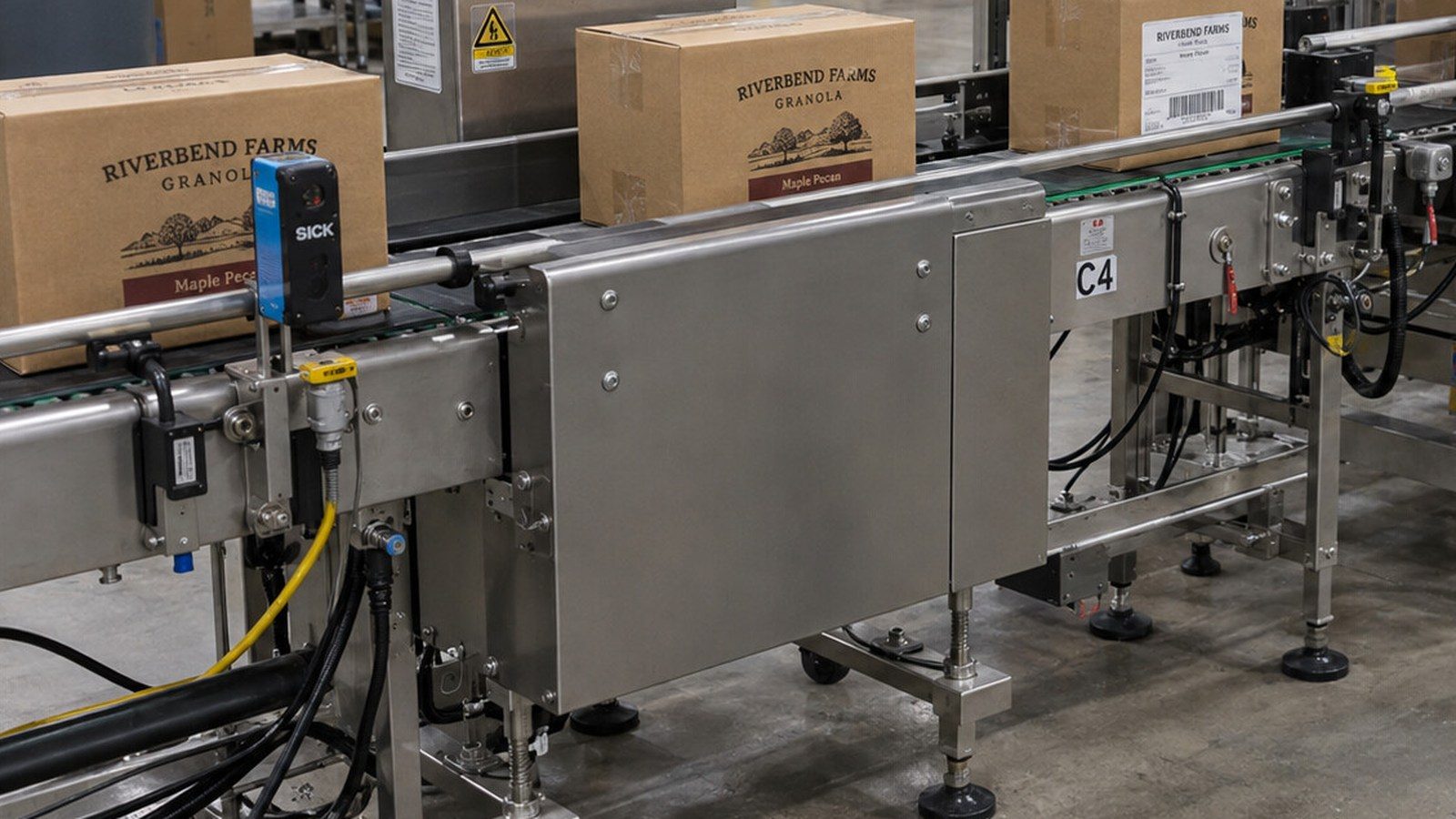
- Field problem
- Accumulation, manual transfer, unsynchronised labelling, format changes or palletising that limit the line.
- Possible building blocks
- Conveying, accumulation, checking, weighing, labelling, carton closing, orientation and operator assistance.
- Useful inputs
- Upstream throughput, formats, flow layout, available space, bottlenecks and changeovers.
- Scoping output
- Flow map, bottlenecks, end-of-line architecture, upstream/downstream interfaces and throughput test plan.
- Field problem
- Uncontrolled access, equipment modifications, added robot/conveyor or safety functions that need to be reworked.
- Possible building blocks
- Risk assessment, guarding, interlocks, emergency stops, safety PLC, validation and documentation.
- Useful inputs
- Machine scope, operating modes, operator access, energy sources, drawings and modification history.
- Scoping output
- Modification scope, safety functions, safety architecture, test plan and related documentation.
- Field problem
- Obsolete PLC or HMI, hard-to-maintain cabinet, unavailable process data or new interfaces to add.
- Possible building blocks
- Cabinet, PLC, HMI, drives, industrial network, alarms, recipes, data collection and backups.
- Useful inputs
- Schematics, IO list, backups, network topology, versions, alarms and machine interfaces.
- Scoping output
- Control architecture, IO list, schematics, software logic, migration plan, backups and documentation.
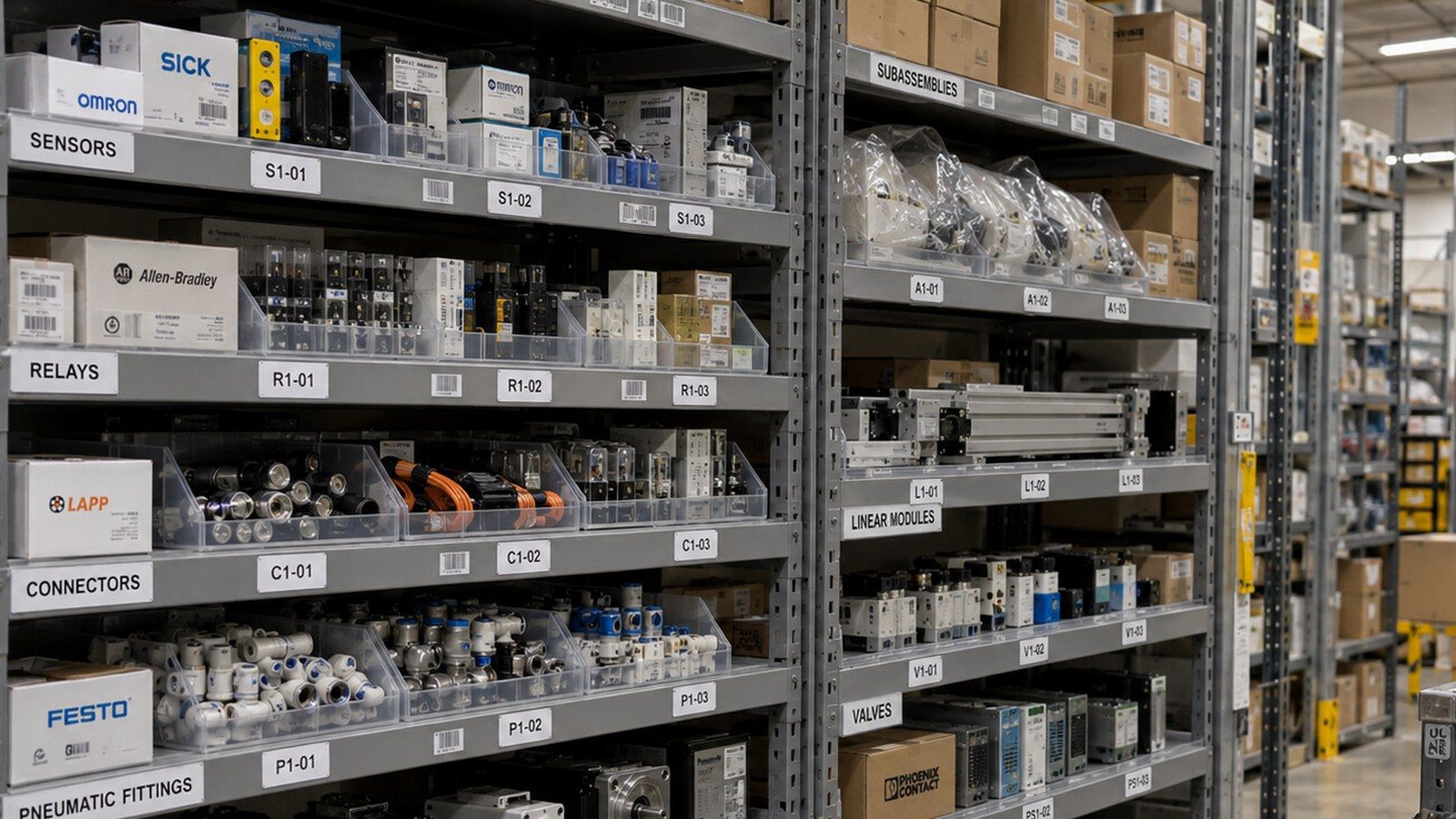
- Field problem
- Critical reference unavailable, custom fabrication need, alternative to qualify or remote supplier without a local technical interface.
- Possible building blocks
- Technical RFQ, supplier screening, documentation, DoC, datasheets, samples, FAT, logistics and spares.
- Useful inputs
- Functional specification, interfaces, internal standards, volume, timing, criticality and required documentation.
- Scoping output
- Short-list, technical comparison, risks, critical documents, validation plan and integration conditions.
- Field problem
- Excessive walking, manual routing, dispatch errors, unstable peaks or a bottleneck between picking, checking and shipping.
- Possible building blocks
- Scanning, conveyors, routing logic, assisted workstations, weighing, labelling, PLC/data interfaces and WMS connectivity where useful.
- Useful information
- Order profile, hourly peaks, layout, SKU variability, error/return rate, current WMS data and recovery flow.
- Scoping output
- Flow map, automation candidates, interface map, staged architecture and measurable acceptance criteria.
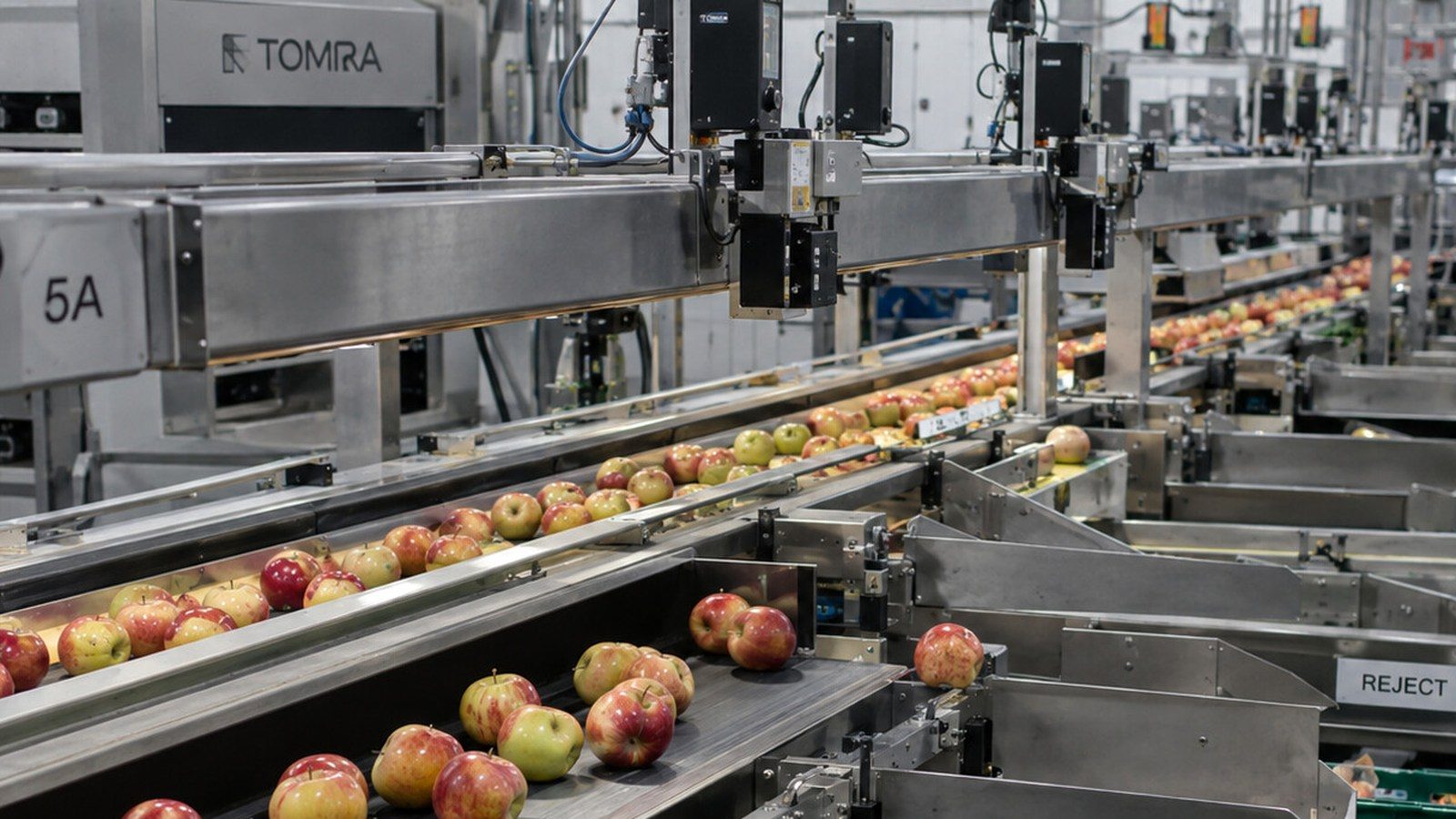
- Field problem
- Natural product variability, subjective manual sorting, excessive reject rate or insufficient traceability of defects.
- Possible building blocks
- Product presentation, controlled lighting, optical sensors/vision, conveyors, reject actuation, recipes and reject-data tracking.
- Useful information
- Varieties, size distribution, representative good/bad samples, throughput, hygiene constraints, cleaning and seasonal variability.
- Scoping output
- Defect library, feasibility test plan, optical principle, rejection logic, cleaning constraints and production-speed validation criteria.
01 ↗02
 ↗03
 ↗04
 ↗05
 ↗06
 ↗
Automation & retrofit
Modernise, automate and extend the life of your equipment.
↗02Machine vision & quality control
Detect, verify, sort and trace in the production cycle.
↗03Packaging & end-of-line
Improve flow, reduce handling and stabilise output.
↗04Machine safety & compliance
Integrate safety into design and retrofit decisions.
↗05Electrical, controls & software
Connect sensors, actuators, PLCs and data in a maintainable architecture.
↗06Technical sourcing Europe–Asia
Qualify components and equipment on performance, compliance and total cost.
↗Engagement levels
From a short diagnostic to full integration.
Scope is selected according to technical uncertainty, risk and need maturity. A small problem does not need a large project.
01Diagnostic / site visitA few hours to one day depending on site+
Objective: confirm the problem, identify critical interfaces and decide whether a pre-study is needed.
- Photos / surveys / available documents
- Open-point list
- Recommended next step
02Technical pre-studyBefore purchase or site work commitment+
Objective: freeze the functional need and compare one or more architectures.
- Concept architecture
- Interfaces and constraints
- Risks / acceptance criteria
- Budget / timing order of magnitude
03Integration / retrofitProject executed on defined scope+
Engineering, purchasing, programming, assembly, coordination, FAT, installation and SAT depending on contractual scope.
04Commissioning & handoverTransition to operations+
Ramp-up, backups, documentation, targeted training and maintenance handover.
Starting point
You do not need to know the exact solution in advance.
Describe the operational problem; scoping is precisely what turns that need into a technical scope.