Food · Optical sorting

Automating a fruit and vegetable sorting line

Illustrative project for a food-processing site seeking more consistent sorting quality, higher throughput and better repeatability.

Illustrative use case
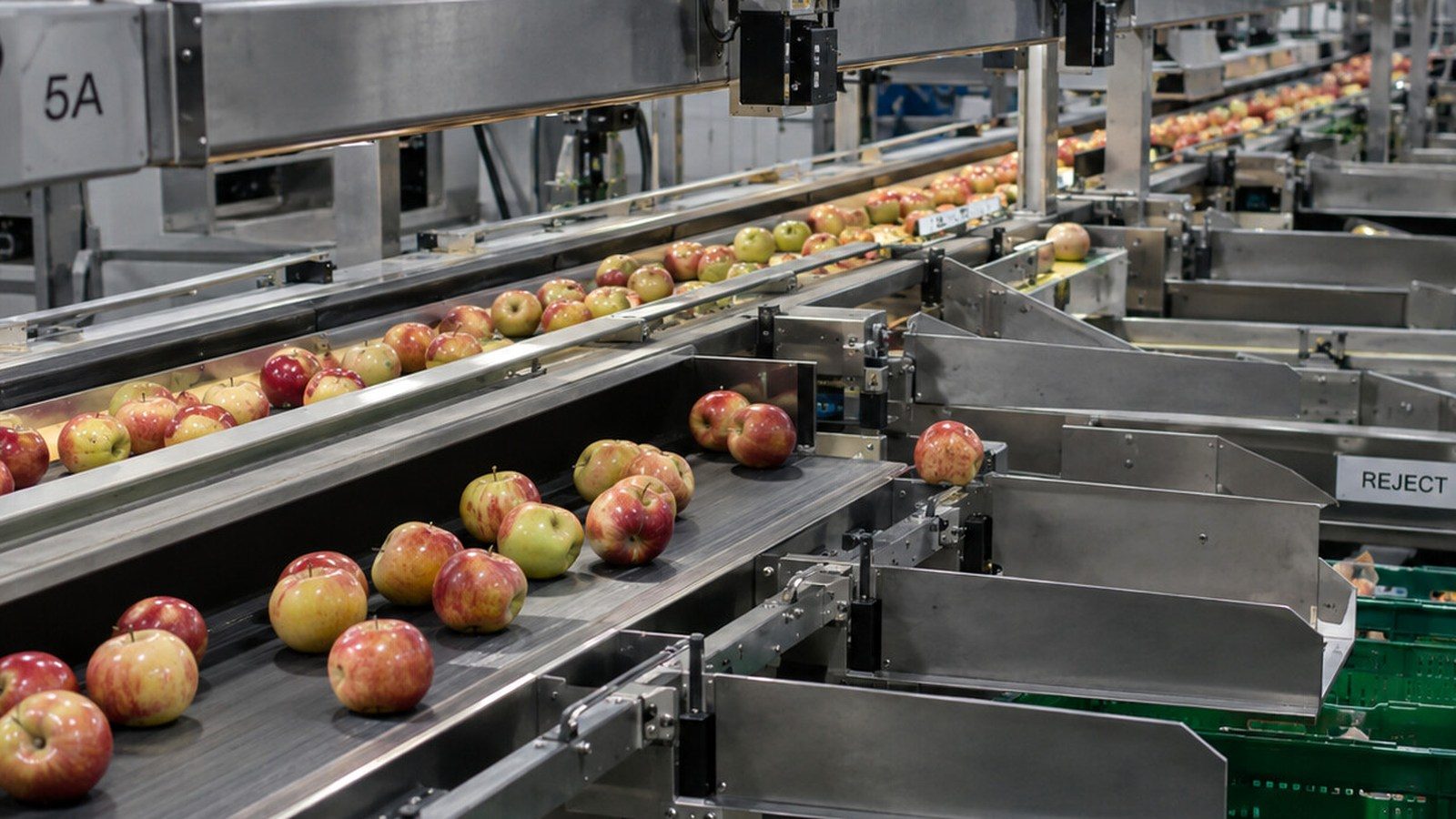
Automating a fruit and vegetable sorting line
01
Context

Starting point

Fruit or vegetable sorting relies heavily on human observation. Product variability, line speed and fatigue reduce consistency over time.

02
Problem

What needs to improve

  • Consistency of visual sorting
  • Ability to absorb seasonal throughput peaks
  • Traceability of rejection reasons
  • Reduced repetitive manual work
03
Possible architecture

A solution to validate with the site

  • Stabilised conveying and consistent product presentation
  • Cameras, lighting and sorting criteria defined with operations
  • Rejection or separation system
  • Counting and reporting by defect class
  • Recipes by variety, size or season

Illustrative use case — architecture and results must be confirmed using real site data and representative products.

Technical scoping sheet

What must be confirmed before designing the solution.

These points are intentionally practical: they prepare a site visit, trial or pre-study.

01Trigger+

Manual or semi-automatic sorting with high natural product variability.

02Architecture to validate+

Product presentation + vision / sensors + conveying + ejection + reject tracking.

03Data to collect+
  • Varieties / sizes / defects
  • Throughput and product distribution
  • Cleaning / humidity / hygiene
04Acceptance criteria+
  • Stable sorting quality
  • Traceable rejects
  • Accessible cleaning and maintenance
05Watch points+
  • Natural product variability
  • Optical contamination
  • False reject management

Natural-product variability

Sorting performance depends on the product population, not only on the camera.

Before selecting optics or algorithms, the project must describe what actually changes from batch to batch and which defects create economic or quality risk.

01Size & geometry

Diameter, shape, orientation and overlap on the conveyor.

02Colour & surface

Ripeness, natural markings, bruising, contamination and reflections.

03Defect classes

What must be rejected, tolerated or sent to manual review.

04Season & cleaning

Moisture, dirt, wash-down, lens contamination and recipe changes.

Product sample

Before choosing the camera, build a representative library of the real product.

An agri-food vision system cannot be specified from a few “good-looking” samples. Acceptable variability, reject defects and production conditions that degrade imaging must be documented.

PRODUCT

Real product population

  • Size, shape and orientation
  • Maturity, colour and texture
  • Wet, dusty or fragile product
  • Seasonal and supplier variation
DEFECTS

Decision classes

  • Critical defects to reject
  • Tolerated defects
  • Ambiguous cases for manual review
  • Cost of false reject / false accept
PRESENTATION

Presentation to the camera

  • Spacing and overlap
  • Orientation and speed
  • Lighting, reflections, shadows
  • Optics contamination
OPERATIONS

Operations

  • Cleaning and washdown
  • Recipe change
  • Reject traceability
  • Validation at real throughput
The vision system should not be selected before building a representative library of the real product.
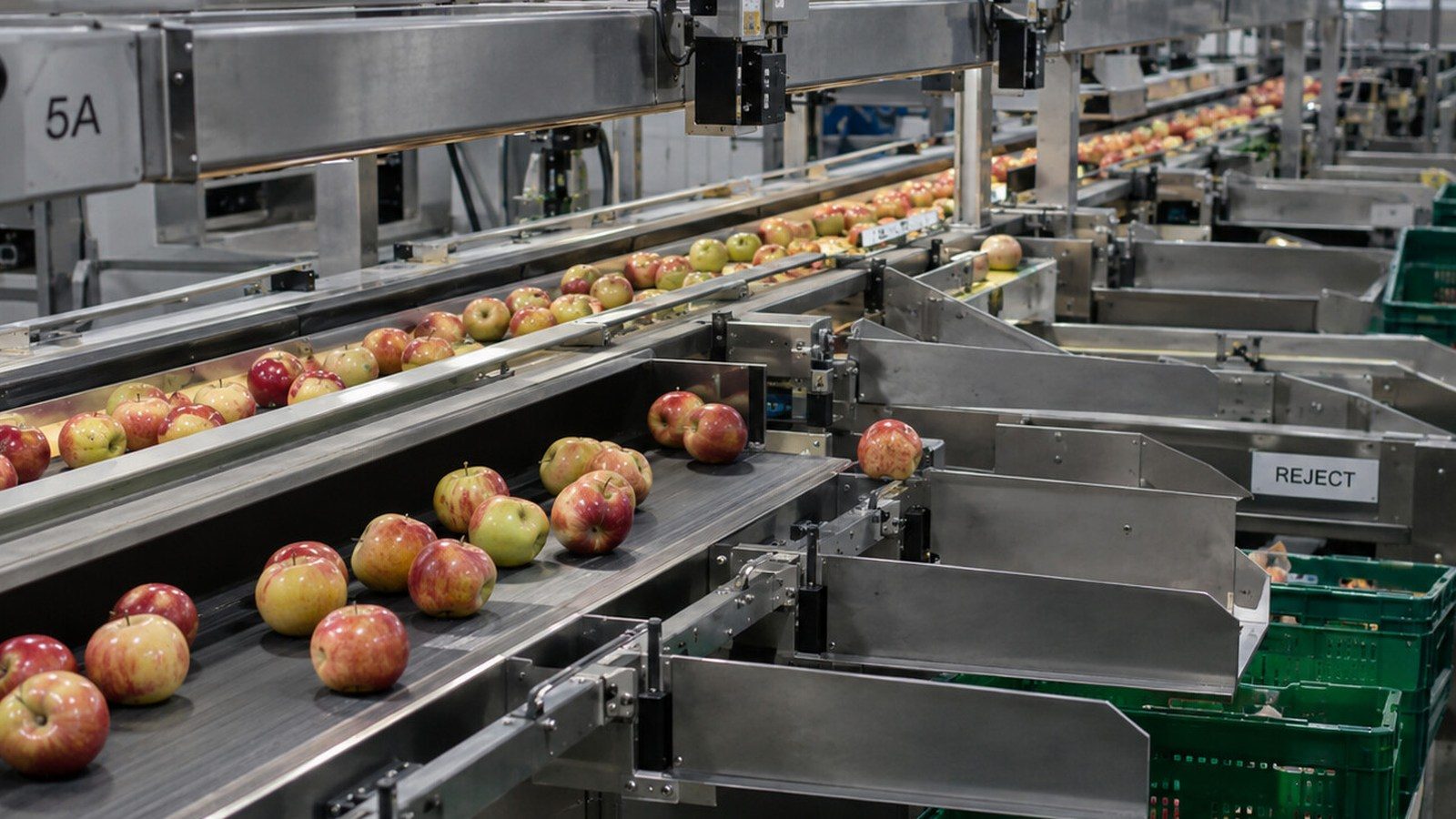
Project architecture and performance are validated against the actual site context.

Key point

Test with representative product lots before scaling.

  • Build representative sample sets
  • Validate speed and lighting effects
  • Define defect classes useful to operations

Pre-qualification

The real site context will determine the final architecture.

Describe the need →
