
Packaging · Productivity
Improving a packaging end-of-line
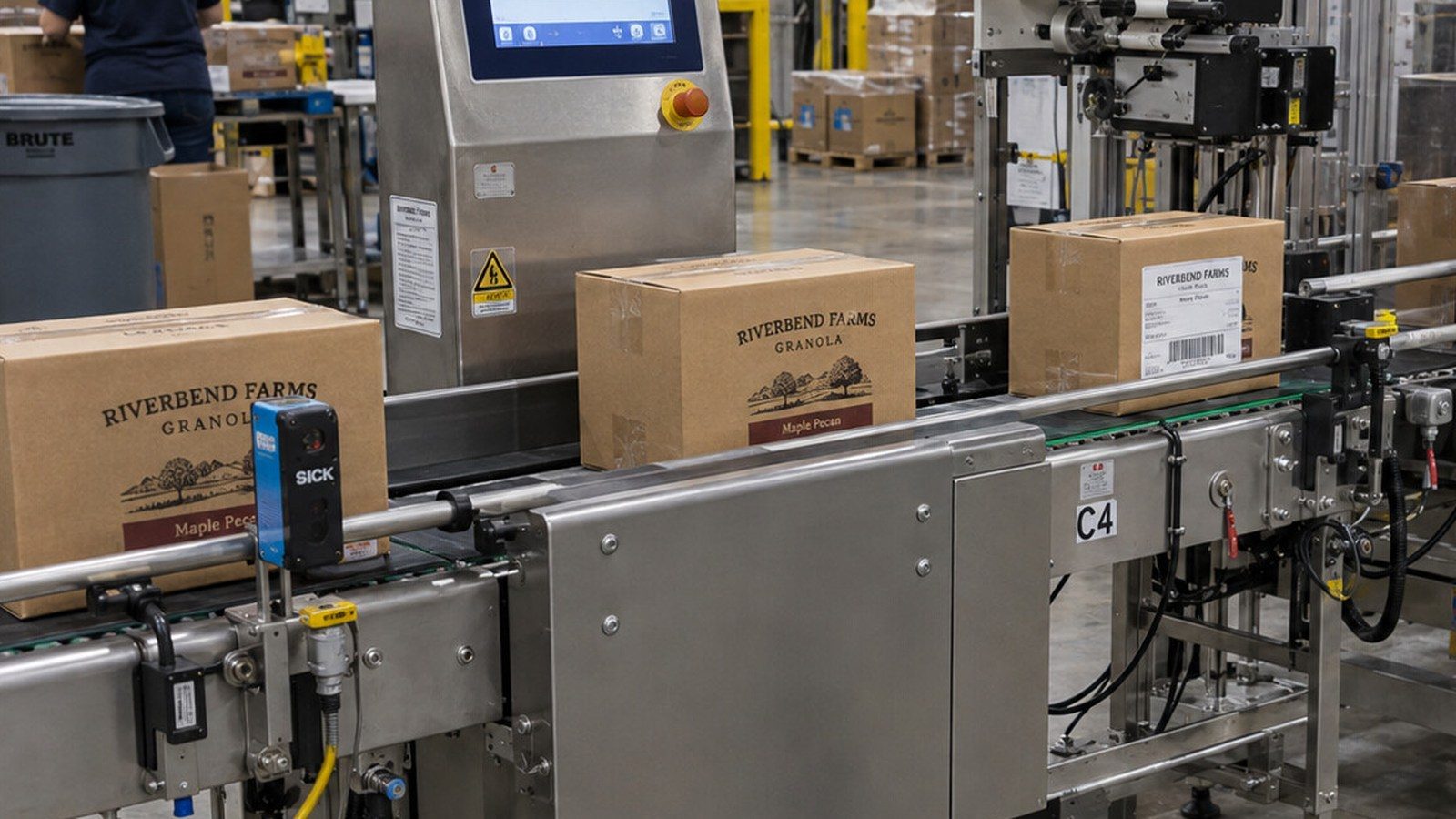
Illustrative progressive retrofit to reduce micro-stops and manual handling at the end of a packaging line.
Illustrative use case
01
Starting point
The main machine produces correctly, but output depends on manual operations and poorly adapted conveying. Small stops accumulate downstream.
02
What needs to improve
- Accumulation and jams
- Unsynchronised labelling
- Manual transfer between operations
- Variation across product formats
03
A solution to validate with the site
- Flow mapping and bottleneck measurement
- Conveying with accumulation zones
- Presence / position sensing
- Synchronisation of marking or labelling
- Assisted or automated case packing depending on ROI
Illustrative use case — architecture and results must be confirmed using real site data and representative products.
Technical scoping sheet
What must be confirmed before designing the solution.
These points are intentionally practical: they prepare a site visit, trial or pre-study.
01Trigger+
Micro-stops, accumulation or manual handling at line exit.
02Architecture to validate+
Conveying + accumulation + labelling / checking + transfer / palletising as needed.
03Data to collect+
- Upstream / downstream throughput
- Formats and change frequency
- Micro-stop time and causes
04Acceptance criteria+
- No critical accumulation
- Controlled changeover time
- Jams and interventions measured
05Watch points+
- Bottleneck moved elsewhere
- Atypical formats
- Maintenance access
Key point
Observe real micro-stops before changing hardware.
- Map accumulation zones
- Separate format issues from control issues
- Measure operator recovery actions
Pre-qualification